
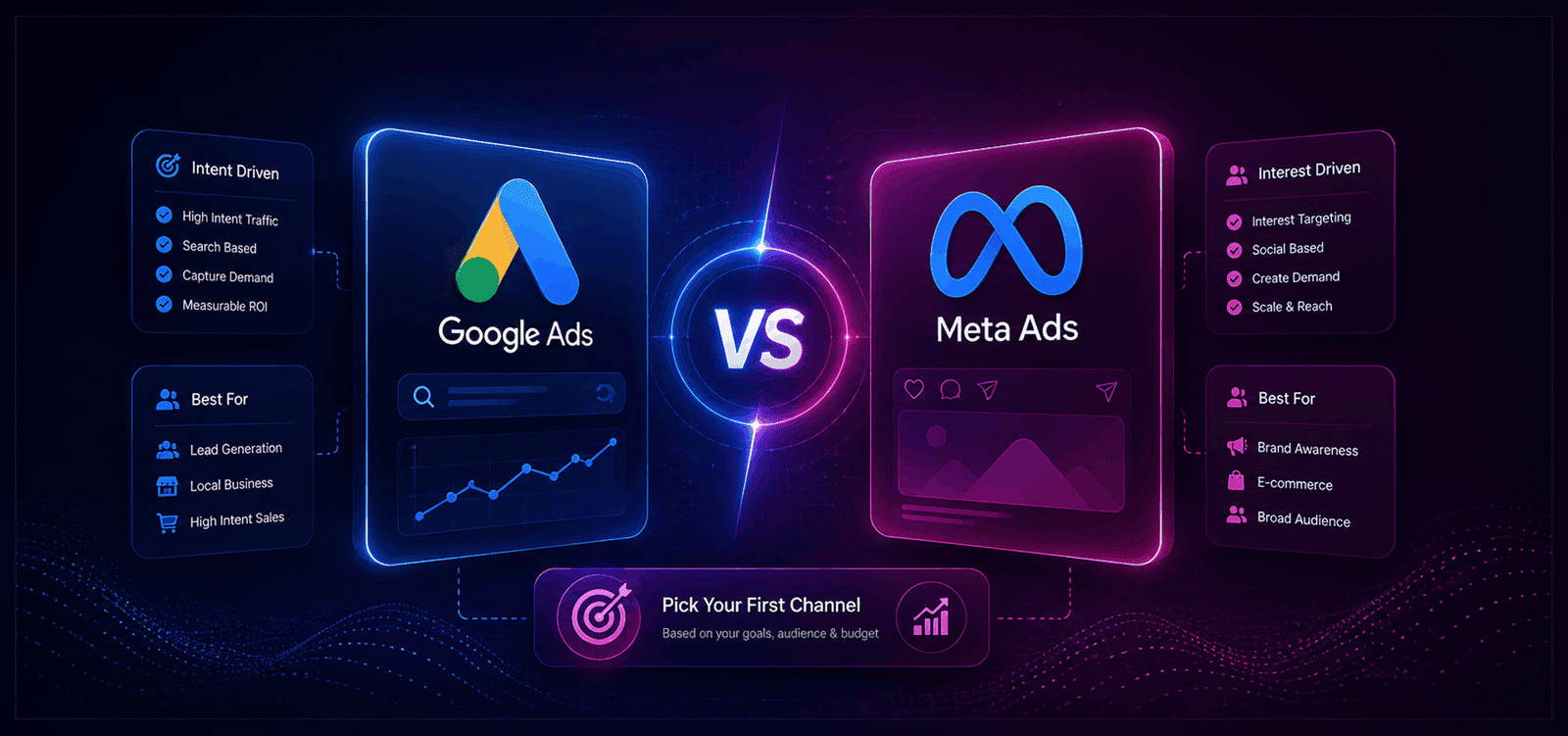
Google Ads or Meta Ads for your first paid channel comes down to one thing: what your customer is doing the moment they see the ad. Google Ads wins for active, high-intent search demand that already exists; Meta Ads wins for creating demand and reaching people who aren't searching yet but fit your audience. Match the platform to that moment.
The Real Question Isn't "Which Platform Is Better"
Google Ads and Meta Ads aren't competing for the same job. One captures demand that already exists. The other creates demand that didn't exist a minute ago. Treating them as interchangeable — or picking whichever one a competitor happens to be using — is the single most common reason early ad budgets underperform.
How the Two Platforms Actually Differ
Intent vs. Interest
Google Ads is built around intent. Someone typing "best project management software for small teams" has already decided they have a problem and is actively shopping for a solution — your ad just needs to be the most relevant answer at that exact moment. Meta Ads is built around interest. Nobody logs into Instagram looking for project management software; you're interrupting their scroll with something they didn't know they wanted yet.
Neither approach is "better" in the abstract. They're suited to different stages of the same buying journey, and most businesses eventually need both.
Cost and Competition Dynamics
Because Google Ads targets existing intent, competition concentrates on a relatively small set of high-value keywords — which is exactly why cost-per-click in competitive B2B categories can climb into double digits. Meta's auction spreads demand across a much larger creative and audience surface, which usually means a lower cost per impression, but it also means results depend far more heavily on the strength of the creative itself.
Google Ads sells to people who are already looking. Meta Ads has to make someone stop scrolling first — and creative quality does most of that work. — Richi Meckvan
When to Start With Google Ads
Start with Google Ads when your product already has established, searchable demand — people actively type queries describing exactly what you sell. It's also the stronger starting point when your sales cycle is short and your offer is easy to evaluate from a single landing page, since you're capturing buyers who are close to a decision already.
When to Start With Meta Ads
Start with Meta Ads when you're introducing a category that doesn't have obvious search volume yet, or when your product benefits from being shown rather than described — visually compelling products, lifestyle-driven brands, or anything where seeing it in action does more convincing than a text ad ever could.
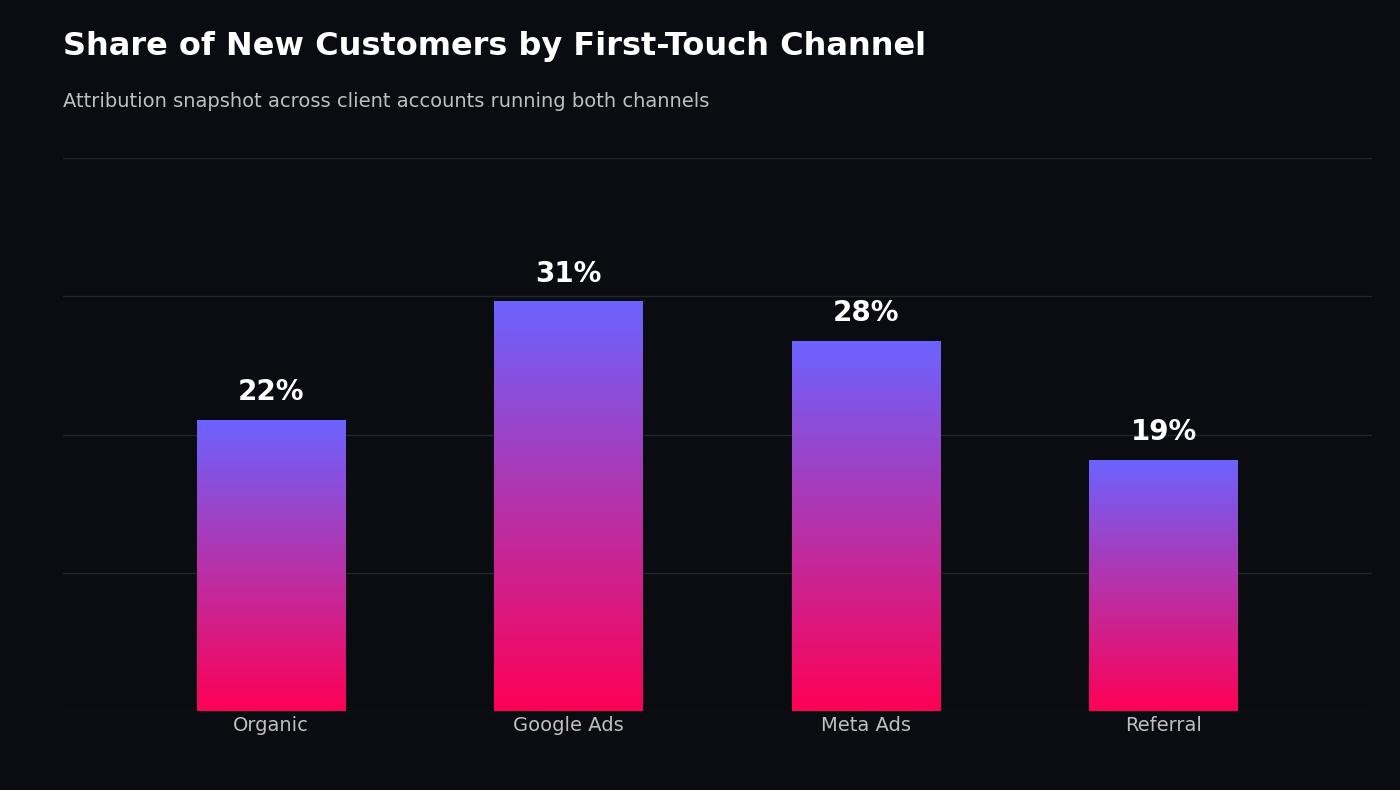
In practice, the accounts I manage that run both channels together tend to outperform single-channel accounts — Google Ads captures the demand Meta Ads spent the previous weeks creating. The data above reflects that: Meta and Google Ads combined account for the majority of first-touch attribution, but neither one dominates completely.
Key Takeaways
- Google Ads captures existing intent; Meta Ads creates interest where none existed yet — they solve different problems.
- If your product already has searchable demand and a short sales cycle, start with Google Ads.
- If you're introducing a new category or a visually-driven product, Meta Ads usually earns attention faster and cheaper.
- The two channels tend to reinforce each other rather than compete once a budget can support both.
If you're trying to decide where your first ad dollar should go, that's a five-minute conversation, not a month of guessing — reach out and I'll walk you through it. If you'd rather have one strategist running both channels instead of juggling two agencies, that's exactly what I do.