

The quick answer
Audit Google AI search visibility by checking access, answer quality, evidence and the links people actually see. Start with a small set of buyer questions and the pages meant to answer them. Record where your site appears, what the answer says and whether its sources lead to you.
Turn each gap into a specific fix. A citation count alone cannot tell you whether your content is accurate, your link is useful or the visitor becomes a customer.
Your business appears in one AI answer and disappears from the next. A competitor's guide gets cited, while your product page is missing. You can spend hours repeating searches without learning what to change.
A useful audit needs a repeatable method. This guide focuses on Google AI Overviews and AI Mode, with a practical review you can run across service pages, SaaS product pages and supporting content.
Jump to a section
What should an AI search audit measure?
Separate being mentioned from being used as a linked source. An answer can name your business while linking to a review site. It can also link to your article without recommending your product.
Decide which outcome matters for each question. A troubleshooting guide may aim to help a reader complete a task. A comparison page may help someone shortlist a product. Do not judge both only by whether the brand name appears.
Use a simple working sheet with these fields:
- Question, buyer stage and target market.
- Page intended to answer it.
- Date, device and search surface checked.
- Brand mention, direct source link and final destination.
- Accuracy of the answer and missing buyer information.
- Proposed fix, owner and review date.
Keep AI Overviews and AI Mode in separate rows. Save screenshots or notes so a colleague can understand the finding without recreating the same response.
Which questions are worth checking?
Start with questions people ask before choosing, paying for or using your service. Use sales calls, support requests, site search and relevant search queries to build the list.
Include several kinds of decisions:
- Fit: which type of solution suits a particular team or problem?
- Comparison: what changes when someone chooses one approach over another?
- Constraints: what does the solution cost, require or fail to support?
- Implementation: how does setup, migration or delivery work?
Keep the questions natural. Do not add your brand to every prompt, then report the resulting mentions as broad market visibility. Branded checks are useful for accuracy; unbranded checks help assess discovery.
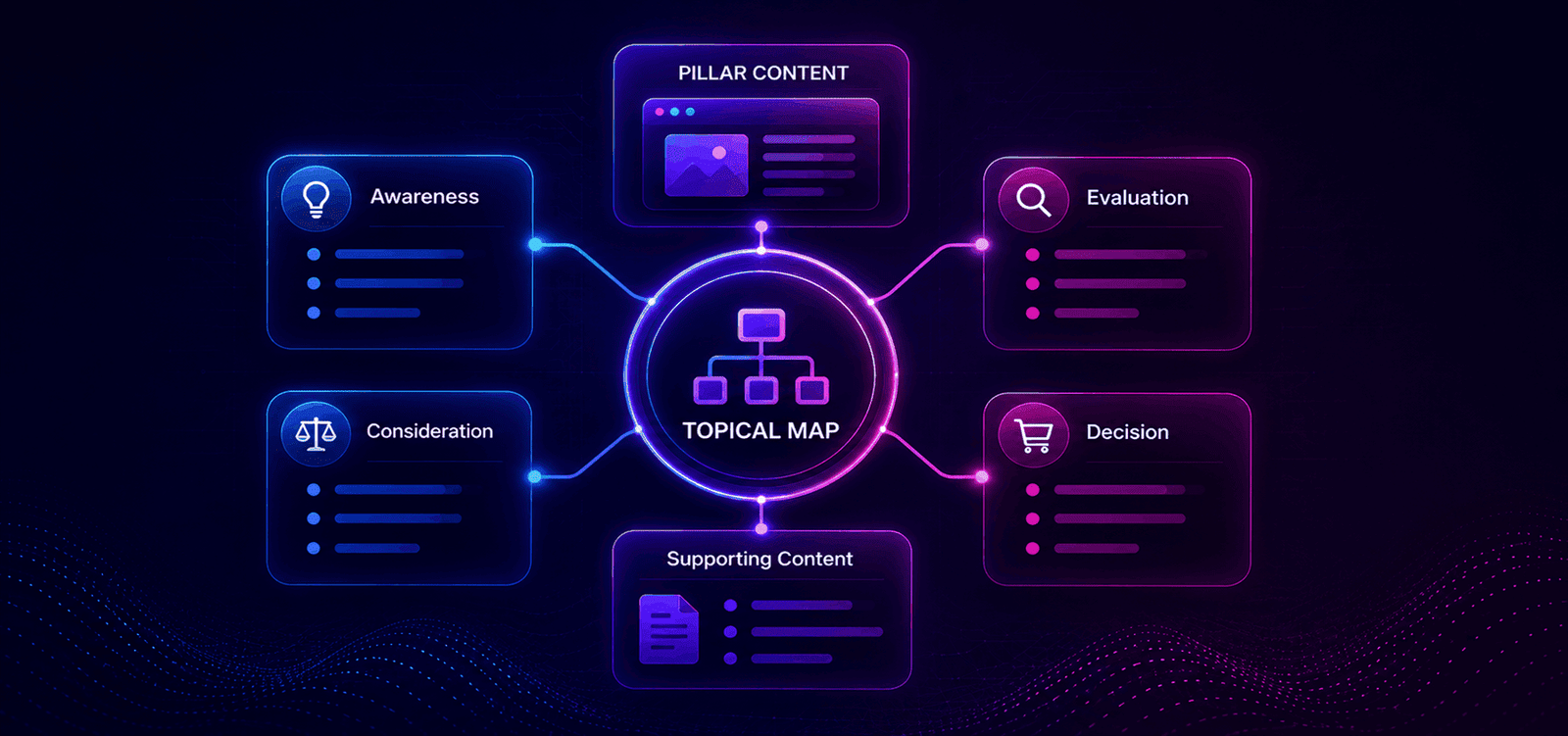
Map each question to a page
If no page answers an important question, record a content gap. If several pages answer it differently, record a consistency problem. If one broad page tries to answer everything, check whether a reader can find the relevant detail without searching through unrelated sections.
You do not need a separate article for every wording. Group questions that share a purpose. The buyer-intent content guide explains how to build those connections.
Can Google use the intended page as a supporting source?
Confirm basic eligibility before rewriting content. Google's AI search guidance says supporting pages must be indexed and eligible to appear with a snippet. It does not require a special AI schema or new machine-readable file, and eligibility does not guarantee inclusion.
For each priority page, check its reported indexing status, preferred URL and public accessibility. Then inspect whether the main answer is present in the rendered content. Use the indexing checklist if the page is missing or another URL is selected.
Review intentional preview restrictions before changing them. A noindex or nosnippet setting may reflect a business decision. The audit should show its effect and owner, rather than automatically removing it.
Keep the important explanation available as text. An image can support a workflow, but pricing limits or eligibility rules should not exist only inside a graphic. Test the page while logged out and on a small screen.
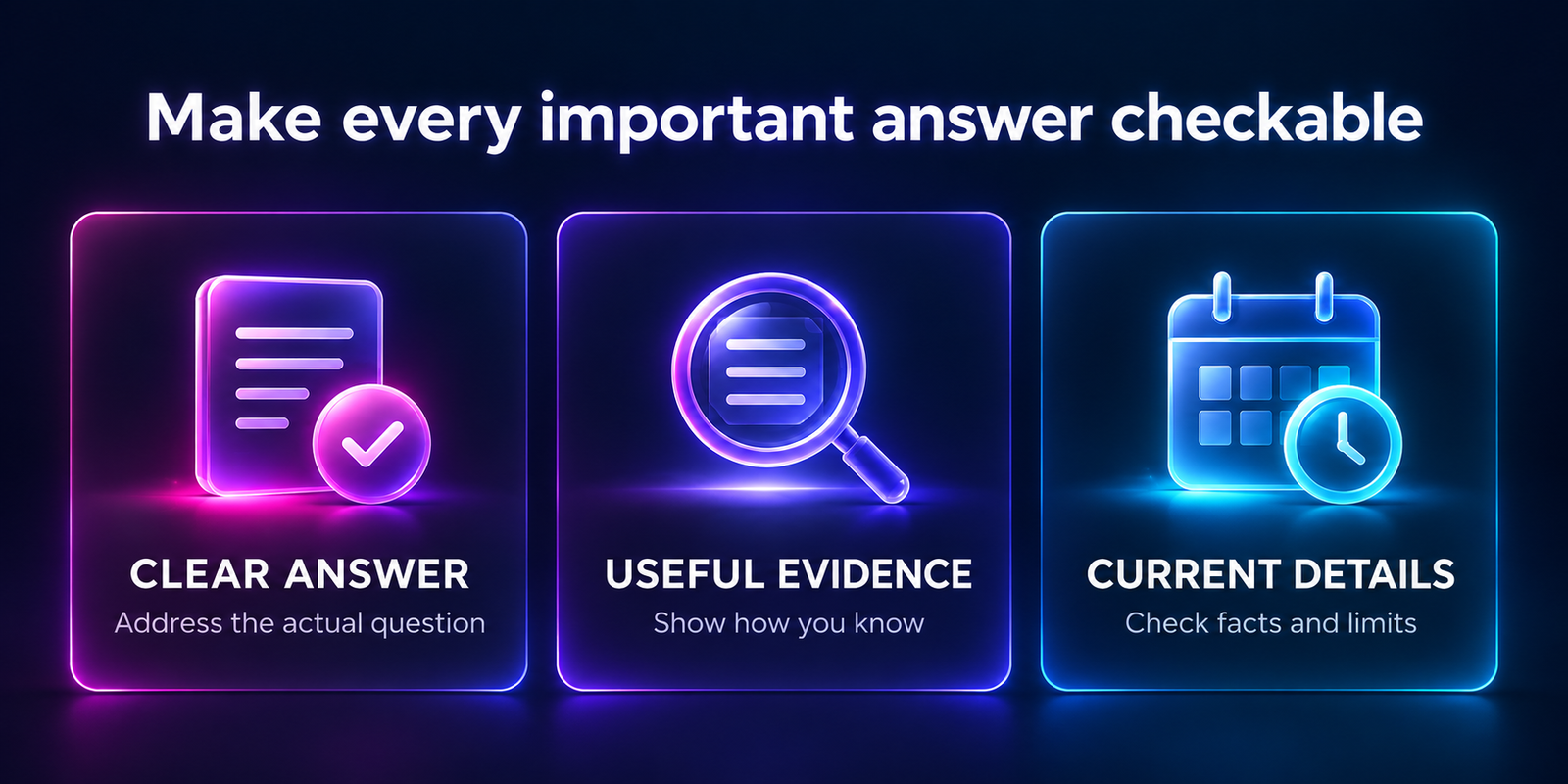
Does the page answer the actual question clearly?
Read the page against one buyer question at a time. Ask someone unfamiliar with the product to find the answer. If they need to infer it from a slogan, the page needs clearer wording.
Place a direct answer near the relevant heading, then explain the conditions and supporting detail. Keep necessary limits close to the claim. A sentence saying “works with every plan” should not rely on a distant footnote that excludes the plan most readers use.
Look for missing decision details
- Service pages: scope, exclusions, delivery steps, responsibilities and cost factors.
- Product pages: supported tasks, plan limits, integrations and setup requirements.
- Comparison pages: who each option suits, important trade-offs and the basis of the comparison.
- Help pages: prerequisites, steps, expected outcome and what to do when a step fails.
Use tables when readers need to compare the same attributes. Use numbered steps when order matters. A FAQ can address leftover questions, but it should not repeat the whole page or hide essential information at the bottom.
This structure helps people understand the page. It is not a formula that guarantees a source link. For a closer review of source-worthy passages, see the AI citation content guide.
Can a reader check the important claims?
Replace broad claims with details that can be checked. “Easy to migrate” is less useful than a clear account of supported imports, required access and the steps your team handles.
Review claims about performance, compatibility, pricing and outcomes. Identify who owns each fact and where it can be verified. Use current product screens, documented methods or permitted customer evidence when they genuinely support the point.
Google's people-first content guidance encourages original value, clear sourcing and information that helps readers achieve their goal. Use that as a quality check, rather than adding an author badge and treating the work as finished.
Check dates and contradictions
Compare the page with pricing, documentation, sales material and relevant public business profiles. Does one say an integration is available while another calls it planned? Does an old article describe a discontinued plan?
Fix the underlying fact wherever you control it. Update dates when the content has actually been reviewed or changed, not merely to make it look fresh. Assign an owner to details that change often.
If an AI answer repeats an outdated claim, save the wording and inspect its cited source. Correct your own source material first. If the cited page belongs to someone else, document the discrepancy; changing your page alone may not immediately change that answer.
What does the cited page do better?
Compare the useful information, not just the word count or layout. Open the source that appears for your target question. Find the passage that actually supports the answer.
Record whether that page provides a clearer explanation, a direct comparison, current product details or a practical process your page lacks. It may cover one narrow part of the question particularly well.
| Finding | Useful action |
|---|---|
| Your page makes a claim without explaining it | Add the method, conditions or product detail needed to judge it. |
| A third party answers a pricing question you avoid | Publish accurate pricing context and explain what changes the quote. |
| Your answer is buried in unrelated copy | Move it under a clear heading and keep the supporting detail nearby. |
| The cited source covers a different audience | Clarify your intended user instead of copying irrelevant content. |
| Your page is useful but never linked internally | Connect it from relevant product, service and supporting pages. |
Do not assume every difference caused the citation. One observed response cannot reveal Google's selection process. Use the comparison to improve the reader's experience and record the result as a hypothesis to review.
A source link can also lead to the wrong place after a redirect. Follow it to the final page and check the mobile experience. A citation to an obsolete URL is a different problem from having no citation at all.
How do you measure progress without overstating it?
Track mentions, links, visits and enquiries separately. They describe different outcomes and need different evidence.

Repeat your fixed question set using the same market, device and search surface. Note whether the answer feature appears at all. Keep “no AI answer shown” separate from “an answer appeared without our site.”
Report counts with their context: how many questions you checked, when you checked them and how many included a direct link. This is coverage within your chosen question set, not your share of every AI search.
Keep observed visibility separate from business results
Use search reporting to review relevant page exposure and visits, then analytics and sales records to review useful actions. Do not label every organic visit as AI traffic. Do not combine a manual citation count with unrelated click totals to calculate an “AI conversion rate.”
Ask leads how they found you where appropriate, but keep their answer separate from tracked attribution. Someone may discover your name in an answer and return through a branded search later.
The guide to visibility without clicks covers this measurement gap. If people arrive but do not enquire, review the demo and conversion journey before assuming the visibility work failed.
Which changes should you make first?
Prioritise by buyer importance, strength of evidence and effort. Avoid turning the audit into a long list of equally urgent recommendations.
- Fix blocked priority pages. Access and indexing problems can prevent the intended page from being considered.
- Correct material errors. Wrong prices, unsupported integrations and misleading limits affect buyer decisions.
- Answer high-value gaps. Improve questions tied to fit, comparison, cost and implementation.
- Improve the route through the site. Connect supporting answers to the relevant product or service page.
- Review repeat observations. Track the same questions after changes have had time to be processed.
For each task, save the affected URL, evidence, change owner and intended outcome. Check whether the edit went live correctly before looking for a visibility change.
Responses can vary between checks. A single new mention is encouraging, but it is not proof that one edit caused the change. Look for repeated observations alongside useful visits and qualified actions.
Common questions
Do I need a separate website for AI search?
No. Start with your existing public pages and the questions they should answer. A separate site can create duplicated or conflicting information without solving the original gaps.
Will adding FAQ schema guarantee a citation?
No. Structured data should describe visible content accurately. It does not buy a place in an AI answer, and adding more markup cannot replace useful information.
Why does my competitor appear when I rank higher?
A ranking comparison alone does not explain a source selection. Review the exact question, the cited passage and the information each page provides. Do not assume a higher ordinary ranking guarantees the same placement in an AI answer.
How often should I repeat the audit?
Choose a manageable schedule, such as monthly for a stable question set, with extra checks after major product or content changes. Review fast-changing facts more often. Consistency matters more than checking the same prompt all day.
Written by Richi Meckvan. Updated on 28 September 2026.