
The quick answer
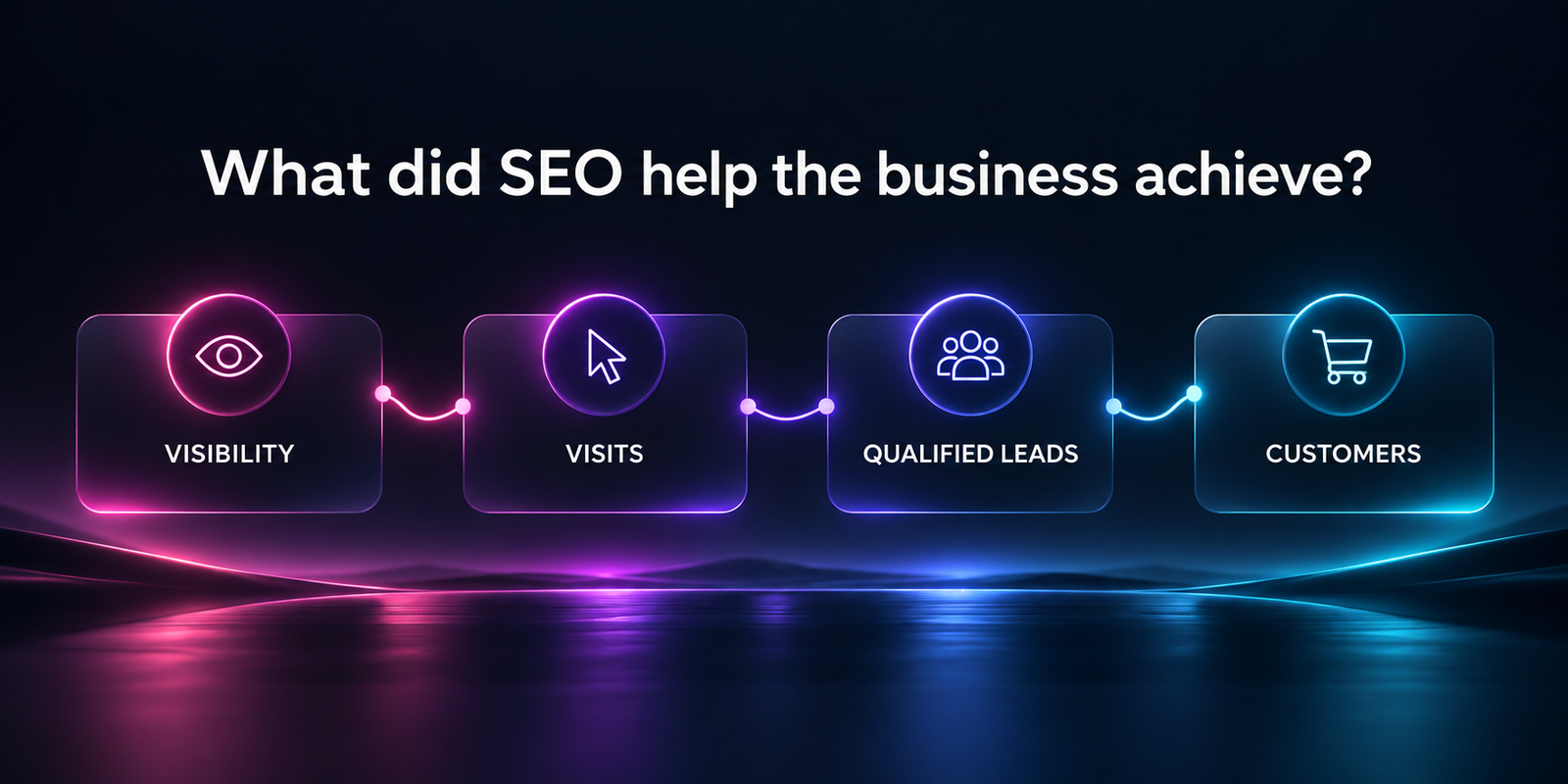
Measure SEO through a chain of outcomes: relevant visibility, useful visits, qualified leads and customers. Keep the definitions and time periods clear. Rankings help diagnose performance, but they do not show whether the business gained suitable buyers.
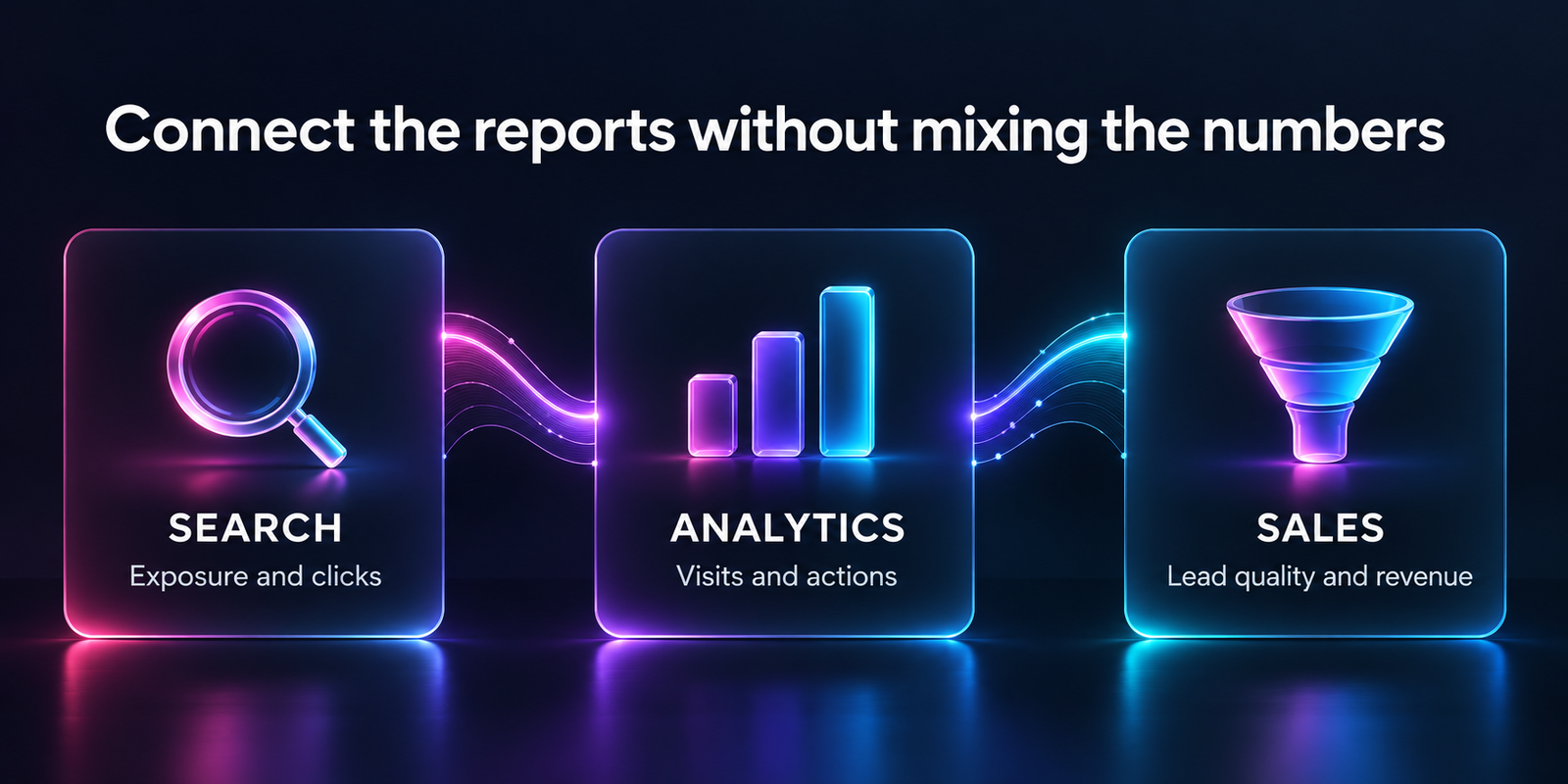
Use search reports for discovery, analytics for on-site actions and sales records for lead quality and revenue. Connect their findings without pretending every number measures the same people.
The monthly report shows more keywords and growing traffic. Sales says the leads are weak. Both teams may be describing real results, but the report has not connected them.
A useful SEO report should answer three questions: what changed, what it meant for the business and what the team should do next.
Jump to a section
Define success before choosing the charts
Choose outcomes that match how your business sells. A self-serve SaaS product may care about activated trials and paid customers. A service business may care about suitable enquiries and signed work.
Write a shared definition of a qualified lead. Include the criteria sales actually uses, such as supported market, relevant need and product fit. Keep spam, job applications and existing customer support requests separate.
Agree when a lead becomes an opportunity and when revenue is counted. A proposal value is pipeline, not money collected. Recurring subscription value, booked contract value and recognised revenue are different measures; label the one you use.
Which numbers belong in each part of the report?
| Layer | Useful measures | Question it answers |
|---|---|---|
| Discovery | Relevant impressions, clicks and query groups | Are suitable people finding us? |
| Website | Landing visits and confirmed useful actions | Does the visit progress? |
| Lead quality | Accepted leads, booked and attended demos | Are the enquiries worth pursuing? |
| Commercial | Opportunities, customers and consistently defined revenue | What business value followed? |
Show a small set of measures with definitions. Avoid adding every available metric just because the dashboard supports it. Keep technical health checks available for diagnosis, but do not present a crawler score as revenue impact.
Can you trust the lead events?
A button click is interest, not a completed enquiry. Test the whole route from landing page to form acceptance, sales record and booking confirmation.
Google's recommended lead event describes submitting a form or request for information. Configure it around confirmed success and check for duplicate firing on reload.
- Verify that failed submissions do not count as leads.
- Check whether a booking service loses the original source.
- Separate requests, booked meetings and attended meetings.
- Reconcile valid enquiries with the sales system.
- Exclude internal checks and identify spam consistently.
Record known measurement gaps, including consent choices and cross-device journeys. Do not send personal form details into analytics simply to force a match. Use an appropriate, privacy-conscious process to connect business records.
The demo conversion guide covers this journey in more detail.
Which traffic changes deserve attention?
Break the total into groups with different purposes. A surge in support visits should not be compared directly with new prospects reading pricing pages.
Group landing pages into learning, evaluation, buying and customer support. Separate brand and non-brand search queries where available, and compare relevant markets and devices.
Then ask whether the same pages improved. New content can increase total traffic while previously strong commercial pages decline. Report established pages and newly published pages separately when that distinction matters.
Use matching date ranges and note seasonality, campaigns and site changes. For a small business with few leads, show the count beside the percentage. One additional enquiry can create a large percentage increase without establishing a reliable trend.
How do you connect search, analytics and sales?
Use consistent landing-page groups and source definitions. Search Console clicks and analytics sessions are not interchangeable. Tracking conditions, timing and measurement rules can make their totals differ.
Google's Search Console and Analytics integration supports reviewing search and website performance together. It does not give you a complete person-by-person path from every search query to a sale.
Define the rate before calculating it
Landing-session lead rate = sessions with a confirmed lead action ÷ eligible landing sessions × 100. Keep the numerator and denominator within the same session-based definition. If you instead track users who convert over several visits, use a user-based measure and state the conversion window.
Lead acceptance rate = accepted leads ÷ valid leads reviewed × 100. Keep pending reviews separate. Otherwise, a slow sales review can make the latest period look worse than it is.
Deduplicate business records consistently. One person submitting twice is not necessarily two new sales opportunities. Decide whether your reporting unit is a contact, account or opportunity and keep that choice visible.
How much credit should SEO receive?
Attribution assigns credit; it does not prove that SEO caused the entire sale. A buyer may discover a guide, attend a webinar, return through an ad and speak to sales before purchasing.
Keep first discovery, the source attached to the lead and later assisted interactions separate. Do not add all three as though they were different customers.
Ask leads how they heard about you where appropriate. Keep self-reported discovery alongside tracked source rather than replacing one with the other. Both can be incomplete.
Allow for the buying cycle
Customers closing this month may have arrived months earlier. Show current activity separately from the eventual outcome of an earlier lead group. Mark recent groups as still developing instead of judging them against fully matured ones.
If you report return on investment, define the revenue or profit measure, attribution method, period and costs included. Content, tools, implementation and ongoing management all affect the cost base. Avoid treating open pipeline as earned return.
Where do AI visibility and zero-click results fit?
Track brand mentions and direct source links as visibility observations. Keep them separate from identifiable visits and qualified actions. An AI answer may name your business while linking elsewhere.
Use a consistent set of questions and record the platform, date and market. A rise within that set does not establish your share of all AI answers. Do not count every organic visit as an AI referral.
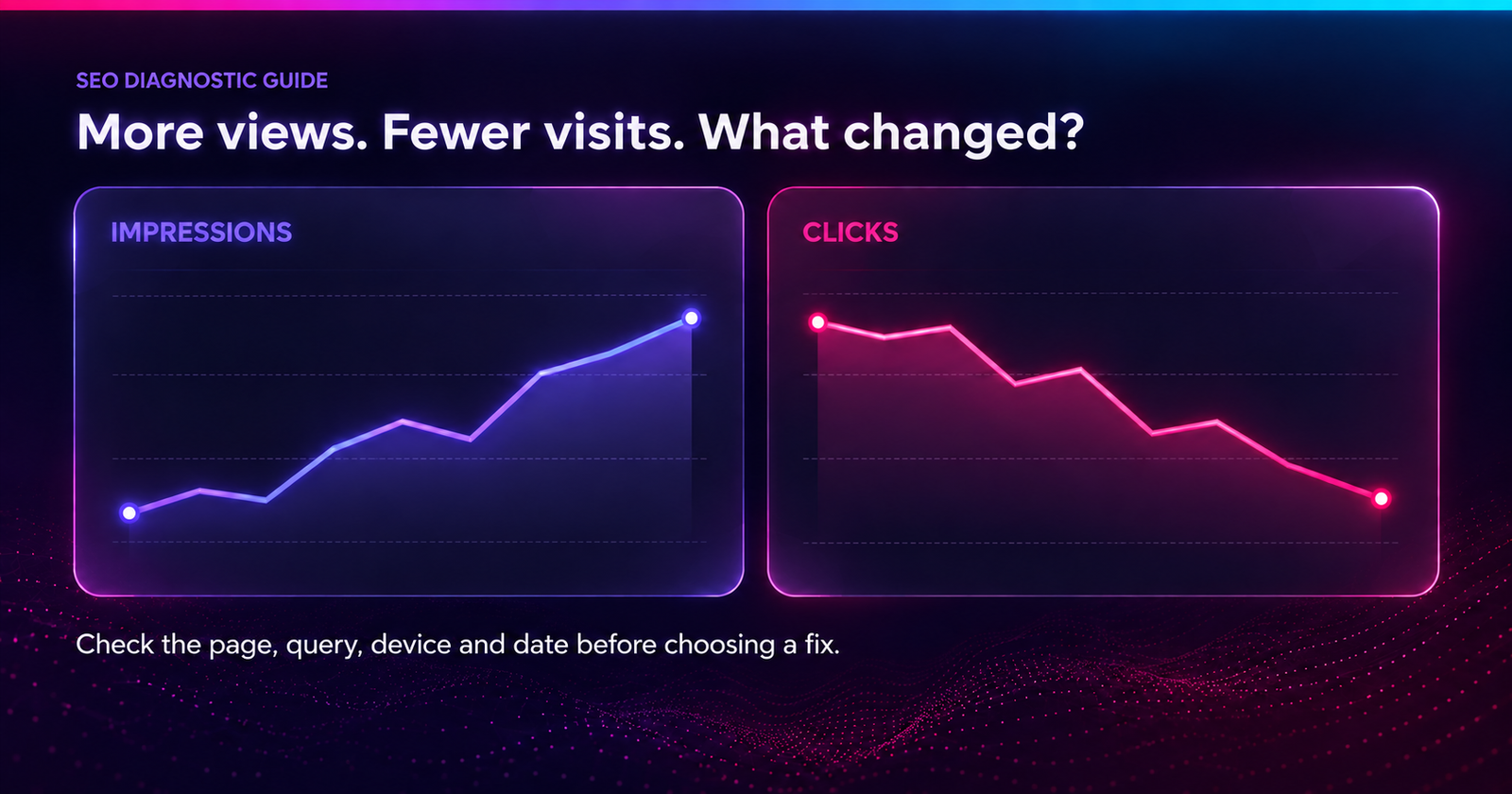
The AI visibility audit explains the checks. If search exposure rises while visits fall, use the impressions-versus-clicks guide before assuming either success or failure.
Make the report end with decisions
For each important change, state the observation, strongest explanation and next check. Separate what you know from what you suspect.
- Relevant visits up, requests flat: review offer clarity and the form journey.
- Requests up, accepted leads down: review audience fit and qualification.
- Visibility down on buying pages: inspect those pages and query groups before expanding content.
- Bookings up, attendance down: review expectations, response time and scheduling.
Assign an owner and review date to the next action. Keep a short change log so the following report can assess what happened after the work went live.
Use the same framework to judge a programmatic page rollout or a content audit. The number of pages published is an output. Whether they help suitable customers is the result worth investigating.
Common questions
Should I stop reporting rankings?
No. Use them to diagnose visibility on relevant searches. Keep them alongside useful visits and business outcomes rather than making them the whole report.
Why do clicks and sessions not match?
They measure different activity and depend on different collection rules. Check tracking changes and major gaps, but do not expect exact equality.
Can I report SEO revenue without complete attribution?
You can report the revenue associated with a clearly defined attribution method and disclose its limits. Avoid presenting that association as proof of exclusive causation.
What if the site gets very few leads?
Use longer periods, show counts and review individual lead quality. Keep earlier indicators such as relevant visits, but do not invent certainty from small changes.
Written by Richi Meckvan. Updated on 5 October 2026.